Best CS2 Cases to Hold (2026): The Value Cases
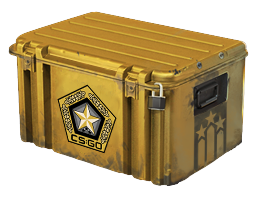
The best CS2 cases to hold are the ones whose supply is frozen or slowing while demand stays alive — discontinued containers like the Operation Bravo Case at the top, and slowing mid-age cases below it — not the pennies-cheap cases still dropping every week. Treating a sealed case as an asset is a real strategy with a real logic, but it is speculative, and this guide sets out the thesis, the candidates, and the risks honestly. Note the framing: this is about holding sealed cases, never about the losing bet of opening them.
One thing this article is not is investment advice. It is documentation of how case supply and demand behave, with dated figures, so you can reason about the ROI question — best ROI case CS2 is a real search for a reason — with clear eyes rather than hype.
The distinction between the two kinds of case is the entire game here. Holding is not opening: a held case is a sealed object you are betting will get scarcer, whereas opening destroys the object for a random roll. Everything below is about the first activity only. CrateCodex does not encourage opening any case, and the value thesis explicitly depends on the case staying sealed — the moment you open it, you have traded a scarcity bet for a negative-expected-value gamble, which is the opposite of the strategy.
The thesis: frozen supply, living demand
A case gains value when copies leave circulation faster than new ones arrive. New cases drop free every week, so their supply grows and their price stays near zero. Once a case is retired — and especially since Valve removed the rare weekly drop pool on 17 December 2025 — no new copies enter the economy, while copies are steadily opened and destroyed. If demand holds, a shrinking supply means a rising floor. That is the entire case-holding thesis, and it is the same scarcity logic that governs any collectible, explained in more depth in retired and discontinued CS2 cases.
Which cases fit the thesis
The clearest holds are the already-discontinued cases, led by the Operation Bravo Case in its long-running $50–80 band. Below them sit the mid-age cases that were in the rare pool when it was removed — the Gamma 2 and Revolver cases around $2–4 — whose supply is now capped and which have room to appreciate if demand grows into their frozen float. The table gives dated bands for the containers most often discussed as holds.
| # | Case | Status | Price band (Sep 2026) | Why it's discussed |
|---|---|---|---|---|
| #1 | Operation Bravo | Discontinued | ~$50–80 | Long-frozen supply, legendary skins |
| #2 | Gamma 2 | Rare pool → removed | ~$2–4 | Supply capped Dec 2025, low base |
| #3 | Revolver | Rare pool → removed | ~$2–4 | Supply capped Dec 2025, low base |
| #4 | Dreams & Nightmares | Older, in demand | ~$0.35–0.60 | Nightwish + knife-pool demand |
| #5 | Fever | Current | ~$0.50–1.00 | AWP Printstream demand; supply still growing |
Notice the split. The cheap current cases like Fever are contents plays — you are betting demand for a skin like the AWP Printstream outlasts the case's growing supply — while the retired cases are pure scarcity plays. They are different bets with different risk profiles, and lumping them together is how people lose money on cases.
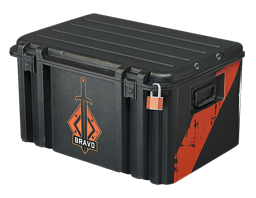
There is a timing subtlety worth understanding. A case does not jump in value the day it is discontinued; it drifts upward slowly as the unopened float shrinks, which can take years. The mid-age cases capped by the December 2025 rare-pool removal are early in that curve — their supply stopped growing recently, but plenty of copies still exist, so any appreciation is a long game rather than a quick flip. The Operation Bravo Case, by contrast, is late in the curve, which is why it already commands a $50–80 band. Where on that curve a case sits matters as much as whether it is frozen at all.
The risk you cannot ignore
The whole strategy rides on a volatile market. The CS2 skin economy swung from about $5.67B in March 2026 down to $3.37B and back to $7.1–7.3B by mid-year, and every case moves with that tide regardless of its own supply story. Valve can also change the rules without warning, as the unannounced December 2025 rare-pool removal showed — the same kind of quiet update could reintroduce supply or shift demand overnight. A held case is exposed to all of that, with no dividend and no guarantee, which is why we call it speculative rather than safe.
There is also an opportunity-cost point. Money parked in sealed cases is money not spent on the skins you would actually enjoy using, and unlike a skin, a sealed case gives you nothing to look at while you wait. For most players the honest answer to "which case should I hold" is "probably none — buy the skin you want instead," and that is a perfectly good answer.
And liquidity cuts both ways. The cheap current cases are extremely liquid — you can buy or sell thousands in seconds — but they are cheap precisely because supply is unlimited. The genuinely scarce cases that fit the thesis are far less liquid: fewer buyers, wider spreads, and a real chance that when you want to sell, the market for a niche sealed container is thin. A thesis that only works if you can eventually find a buyer at a higher price has to account for whether that buyer will actually be there, which for the rarest cases is not guaranteed.
How to hold, if you do
If you hold cases anyway, do it deliberately. Buy on the Steam Community Market or an established marketplace, never a case-opening site; favour genuinely frozen-supply cases over ones still in rotation; use dated price bands rather than live spikes to decide entry; and size the position as speculation you can afford to lose. Above all, keep the two activities separate in your head: holding a sealed case is a scarcity bet, opening one is a negative-expected-value gamble, and the full CS2 case catalogue documents every current case so you can tell which is which. And if in doubt, remember that the safest position of all is the one where you simply buy and enjoy the skins you want, and treat any case-holding as a small, clearly-labelled speculation on the side rather than the main event.
Frequently asked questions
What is the best CS2 case to hold for value?
The discontinued, frozen-supply cases have the clearest thesis — the Operation Bravo Case is the headline example at a ~$50–80 band. Mid-age cases capped by the Dec 2025 rare-pool removal, like Gamma 2 and Revolver, are lower-base alternatives. All are speculative.
Do CS2 cases go up in value?
Retired cases can, because their supply is frozen while copies keep being opened. But the whole market is volatile — it swung from about $5.67B to $3.37B and back above $7B in 2026 — so appreciation is not guaranteed and cases can fall too.
Should I hold cases or buy skins?
For most players, buy the skin you want — a held case pays no dividend, gives you nothing to use, and ties up money in a volatile bet. Case-holding only makes sense as deliberate speculation with money you can afford to lose.
Is holding a case the same as opening one?
No, and the distinction matters. Holding a sealed case is a scarcity bet on frozen supply; opening a case is a separate, negative-expected-value gamble. CrateCodex documents cases but never encourages opening them.
See this case alongside every other in the full CS2 case catalogue, ranked by contents, odds and price band.