Every CS2 case, opened on paper
The full catalogue of Counter-Strike 2 cases — real drop-pool contents, the published odds, and price bands with the date we checked them. Documentation, never case-opening.
On this page
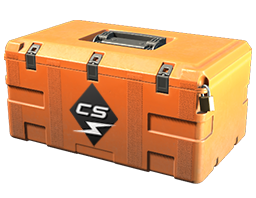
A CS2 case is a sealed container that holds a fixed set of skins across five rarity tiers, and it opens only with a matching key. Across the current Counter-Strike 2 cases the contents follow one structure — ten weapon skins over a single pool of rare special items (knives or gloves) — and the odds are always the same: 79.92% Mil-Spec, 15.98% Restricted, 3.20% Classified, 0.64% Covert and 0.26% for the gold knife-or-glove pool. This page catalogues every case worth documenting by what it contains, how rarely each tier drops, and the price band we last checked.
Everything here is documentation. CrateCodex does not run a case-opening site and never links to scams; the odds below are the published rates, and the prices are bands with a read-date, because a static page that quotes a live case price is wrong within a day.
The short version: what is inside a CS2 case
Every standard case contains the same skeleton: seven Mil-Spec (blue) skins, five Restricted (purple), three Classified (pink), two Covert (red), and one pool of ★ rare special items — the knife or gloves — sitting behind a 0.26% door. That 0.26% works out to roughly one rare special item per 385 openings. Separately, about 10% of every unbox rolls as StatTrak, and wear (Factory New down to Battle-Scarred) is a further independent roll inside each skin's float range.
Those figures are not our measurement — they are the odds Valve first disclosed under 2017 Chinese law and has kept unchanged in CS2, confirmed since by large community unboxing datasets. We explain the mechanic in detail in how CS2 case odds actually work and the gold tier specifically in the knife and glove 0.26% explainer.
Two things the tier odds do not capture are worth stating up front. First, the StatTrak roll is independent: roughly one in ten of every drop, at any tier, comes back as a kill-counting StatTrak variant, which usually adds value. Second, wear is decided separately again, so the same Covert skin can arrive Factory New or Battle-Scarred depending on where it lands inside that skin's allowed float range. A single opening therefore resolves three separate dice rolls — tier, StatTrak, wear — which is exactly why the outcomes feel so swingy and why averages, not single pulls, are the only honest way to talk about cases.
How to read this catalogue
Read each case by its pool, not its cover. A case is only as interesting as the skins you would actually want to own, so we list every case by its two Covert skins (the red top-end that most openings are chasing) and by whether its rare pool is knives or gloves. The drop-pool tree on each case file shows the same information visually: the wider the bar, the more often that tier drops.
Counts vary slightly between cases in the rare pool. The Kilowatt and Gallery cases share a single knife — the Kukri — across its finishes, while older cases like Dreams & Nightmares carry five classic knife types. A bigger rare pool means more possible knives, not better odds: the door is 0.26% either way.
One more distinction saves a lot of confusion: whether a case's rare pool is knives or gloves. Gloves cannot take StatTrak and have their own finish families, so a glove case such as Revolution or Recoil plays differently at the top end than a knife case such as Kilowatt or Dreams & Nightmares. Neither is rarer than the other — again, the gold door is 0.26% — but the ceiling item is a different kind of object, and the market prices knives and gloves separately. Where a case introduced a brand-new item, we note it: Kilowatt brought the Kukri Knife into the game, and Gallery later reused that same Kukri pool rather than adding a new blade.
The current cases worth documenting
If you are choosing a case to read about, start with the newest and cheapest, because those are the ones in active circulation. The table below sets out the cases we cover in full, each with its release date, its Covert headline skins, whether the rare pool is knives or gloves, and the price band we last checked in September 2026.
| # | Case | Released | Covert (red) skins | Rare pool | Price band (Sep 2026) |
|---|---|---|---|---|---|
| #1 | Kilowatt | Jan 2024 | AWP Chrome Cannon · AK-47 Inheritance | ★ Kukri Knife | ~$0.10–0.20 |
| #2 | Fever | Feb 2025 | AWP Printstream · FAMAS Bad Trip | ★ 4 knife types | ~$0.50–1.00 |
| #3 | Gallery | Jul 2024 | M4A1-S Vaporwave · Glock-18 Gold Toof | ★ Kukri Knife | ~$0.25–0.45 |
| #4 | Revolution | Jan 2023 | M4A4 Temukau · AK-47 Head Shot | ★ 6 glove families | ~$0.20–0.35 |
| #5 | Recoil | May 2022 | USP-S Printstream · AWP Chromatic Aberration | ★ 6 glove families | ~$0.30–0.55 |
| #6 | Dreams & Nightmares | Nov 2021 | AK-47 Nightwish · MP9 Starlight Protector | ★ 5 knife types | ~$0.35–0.60 |
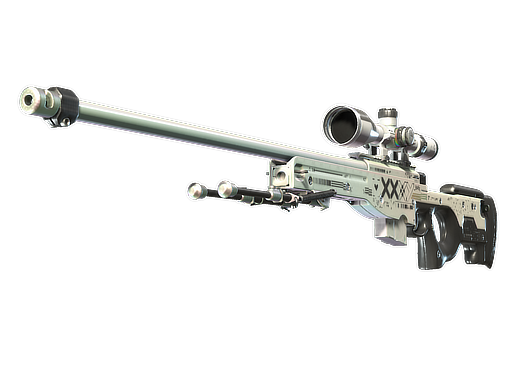
Two of those Coverts — the AWP Printstream in Fever and the USP-S Printstream in Recoil — are among the most sought-after skins in the game, which is why those cases hold value better than their tiny sticker price suggests. Full pools, notable skins and dated bands live in each case file: Kilowatt, Fever, Gallery, Revolution, Recoil and Dreams & Nightmares. The Clutch, Fracture and Snakebite cases have their own files too.
"Best case to open in CS2" — the honest answer
There is no case that pays to open; the honest answer to "best case to open" is that the phrase is the wrong question. Every case is priced by the market so that the expected value of its contents, minus the key, is negative — that is how the system funds itself. Search volume for "best case to open in CS2" is real, but what people usually want is which case holds contents worth owning if they get lucky, or which case is cheapest to gamble on.
If you insist on a framing: the cases with the strongest Covert tier relative to their price are the ones whose ceiling is worth chasing — Fever and Recoil for their Printstream AWPs and USPs, Kilowatt for the Kukri. But the disciplined move is almost always to buy the skin you want outright on a marketplace rather than open cases for it, and we say so plainly. Our best-value cases to hold piece looks at cases as a sealed asset instead, which is a different question with a more defensible answer.
It helps to put a number on it. At the published odds you open on average 385 cases to see one gold item, and each of those openings costs a key — commonly a few dollars — on top of the case itself. Even before you ask what the knife is worth, that is well over a thousand dollars of keys per expected knife, against a knife that, since the October 2025 trade-up update roughly halved knife and glove values, is worth less than it once was. The maths is why we frame "best case to open" as a question about contents you would enjoy owning, not about return.
Case price bands and what moves them
Case prices are set by supply and by unboxing demand, and right now supply is the bigger story. The cheapest current cases — Kilowatt at roughly $0.10–0.20 and Revolution near $0.20–0.35 in September 2026 — are the ones still dropping for free each week, so they are effectively unlimited. The expensive ones are frozen.
On 17 December 2025 Valve quietly removed the "rare" weekly drop pool — the roughly 1% chance a free weekly drop was a discontinued case. Legacy containers like the Operation Bravo Case (long a $50–80 band) no longer enter circulation at all, so their supply can only shrink. That single change is why older cases are appreciating, and we track the scarce ones on the rarest and retired cases page. Valve published no changelog for the removal, so we flag it as community-reported.
The wider market matters too: the CS2 skin economy swung from about $5.67B in March 2026 down to $3.37B after volatility and back to $7.1–7.3B by mid-2026, and the October 2025 trade-up update cut knife and glove values by around half. A gold unbox is worth less than it was two years ago, which further undercuts the case-opening pitch.
Where to buy or sell cases and skins
You buy cases and skins on the Steam Community Market or on third-party marketplaces; you never need a case-opening site to own any skin in this catalogue. Steam is simplest but charges 15% and locks funds to your wallet. Third-party markets are cheaper and pay real money: as of our September 2026 check, Skinport charges sellers 8% (6% above €1,000, 2% on private listings) with no buyer fee, CSFloat 2%, and DMarket around 2% on liquid items.
If you want to browse or sell, these are established marketplaces — disclosed affiliate links, and none of them are case-opening or gambling sites: SkinBaron, DMarket, Skinport and CSFloat. We may earn a commission if you buy or sell through them; it never changes what we document. Trade Protection (July 2025) makes trades reversible for seven days, so expect P2P markets to credit sellers roughly eight days after delivery.
The practical trade-off between markets is fee versus speed. Peer-to-peer marketplaces like Skinport and CSFloat take the smallest cut but you wait for a buyer; instant-sell and trade-bot sites pay immediately but bake a wider spread into the price, so you net less. For a cheap case worth cents the fee barely matters; for a rare container in the $50–80 band it decides whether selling is worth it at all. Whichever route you pick, none of it involves opening anything — you are trading sealed containers and finished skins, which is the only side of this economy CrateCodex has any interest in.
Souvenir packages are not weapon cases
A souvenir package is a different object from a weapon case, and mixing them up leads to bad expectations. Souvenir packages drop free to viewers and attendees during Majors, open without a key, and always yield a skin — one carrying gold commemorative stickers of the teams and players from that match. They have no knife or glove tier and no 0.26% door. Weapon cases, the subject of this catalogue, need a paid key and follow the five-tier odds above. We break the difference down in souvenir packages vs weapon cases, including the common question of whether souvenir skins can be traded up (they cannot).
What CrateCodex will never do
We will never run an unboxing simulator, frame opening cases as a smart play, or link to scams. That is a firm editorial line, not a mood — case mechanics are the subject of an active New York Attorney General lawsuit against Valve (filed 25 February 2026) and of Valve's own December 2025 ban on inventory-interacting sponsors in licensed esports. Documenting what is inside a case is useful; selling the pull is not something we do.
Frequently asked questions
What are the odds of unboxing a knife or gloves in CS2?
0.26% per opening, which averages one rare special item every 385 keys. The full published breakdown inside a standard case is 79.92% Mil-Spec, 15.98% Restricted, 3.20% Classified, 0.64% Covert and 0.26% for the gold knife or glove pool.
What is the cheapest CS2 case right now?
As of our September 2026 check, the Kilowatt Case sits around $0.10–0.20 and the Revolution Case around $0.20–0.35 — both are still in the active weekly drop pool, so supply is effectively unlimited. Prices move daily, so treat these as dated bands and check live before buying.
Which CS2 case is the best to open?
None of them pays to open — every case has negative expected value once you price the key. If you mean which case has the best top-end contents, Fever and Recoil stand out for their Printstream skins and Kilowatt for the Kukri knife, but buying the skin you want outright is almost always cheaper than chasing it.
Why are old CS2 cases so much more expensive?
Because their supply is frozen. On 17 December 2025 Valve removed the rare weekly drop pool, so discontinued cases like Operation Bravo no longer enter circulation from free drops. With no new supply, the scarce ones drift upward over time.
Do I need a case-opening site to get CS2 skins?
No. Every skin in these cases can be bought directly on the Steam Community Market or a third-party marketplace such as Skinport, DMarket or CSFloat. CrateCodex never links case-opening or gambling sites.
Are the drop odds on this site official?
They are the odds Valve first disclosed in 2017 under Chinese regulation and has kept unchanged in CS2, corroborated by large community unboxing datasets. We present them as published rates, not as our own measurement, and note that Valve does not publish the StatTrak sub-split beyond the ~10% headline.