CS2 Case Odds Explained: The Real Drop Rates
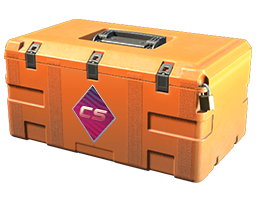
CS2 case odds are fixed and public: every standard case drops a Mil-Spec skin 79.92% of the time, a Restricted 15.98%, a Classified 3.20%, a Covert 0.64%, and a rare special item — a knife or gloves — 0.26% of the time. Those five numbers add up to a hundred, they are identical in every weapon case, and they are the single most important thing to understand about opening cases in Counter-Strike 2. This guide explains where the numbers come from, the extra rolls layered on top, and what they actually mean for an opening.
The five tiers and their odds
A CS2 case contains skins sorted into rarity tiers, and each tier has a fixed drop chance. Mil-Spec (blue) is by far the most common at 79.92%, so four openings in five give a blue skin. Restricted (purple) follows at 15.98%, Classified (pink) at 3.20%, and Covert (red) at just 0.64%. The rare special item tier — the knives or gloves, marked with a gold ★ — sits at 0.26%. Put together, more than 95% of all openings resolve to a blue or purple skin, which is the reality behind the highlight reels: the reds and the gold you came for are the thin top slice of the case.
Because the tiers are fixed, the number of skins within a tier does not change the tier's odds. A case with seven Mil-Spec skins still drops Mil-Spec 79.92% of the time; you are simply spreading that 79.92% across seven possible skins. The same logic governs the gold tier and is the root of the most common misconception about cases, which the knife and glove 0.26% explainer tackles directly.
Where the numbers come from
The odds are Valve's own, first made public in 2017 to comply with Chinese regulations requiring loot-box probabilities to be disclosed. They have not changed in the move to Counter-Strike 2, and they have been corroborated repeatedly by large community datasets that log hundreds of thousands of real openings and land on the same figures. That combination — an official disclosure plus independent verification at scale — is why we publish these as established rates rather than estimates. We do note one limit: Valve does not publish the exact StatTrak sub-split beyond the roughly one-in-ten headline.
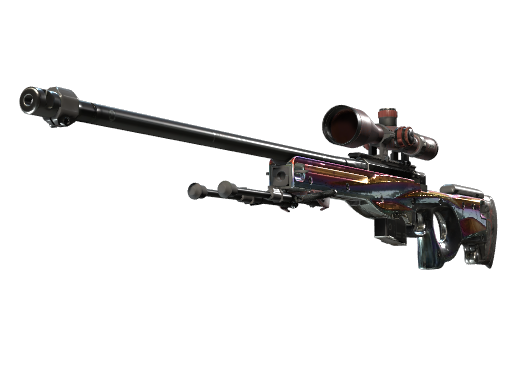
A useful way to feel the shape of these odds is to imagine a hundred openings. Roughly eighty land on a blue Mil-Spec skin, sixteen on a purple Restricted, three on a pink Classified, and then you run out — you would need to open several hundred more before a red Covert appears, and several hundred beyond that before the gold tier does. The distribution is deliberately top-heavy toward the cheap commons, which is exactly what makes the rare items rare and valuable. Nothing about the presentation of an opening — the spinning animation, the near-misses — changes that underlying shape; it is fixed the instant the case is opened.
The rolls on top: StatTrak and wear
The tier roll is not the only dice thrown. Two more resolve independently every time you open a case. First, StatTrak: roughly 10% of all drops, at any tier, come back as a kill-counting StatTrak variant, which usually adds value. Second, wear: every skin is assigned a float value inside its allowed range, translating to a condition from Factory New down to Battle-Scarred, which can swing a skin's worth dramatically. So a single opening resolves at least three separate rolls — tier, StatTrak, wear — and for knives there is a further roll for which knife and which finish. That stack of independent rolls is why outcomes feel so wildly variable.
What 0.26% actually means
A 0.26% chance works out to roughly one rare special item every 385 openings. That is the honest way to read the gold tier: not "one in a few tries," but hundreds of keys, on average, for a single knife or glove — in a finish and wear you do not choose. And 385 is only the average; probability has no memory, so you can open a thousand cases and see none, or hit on your third. Neither result tells you anything about the odds, which stay exactly 0.26% on every single opening regardless of what came before.
The same arithmetic applies down the ladder. A specific Covert, sharing the 0.64% band with one other red, is roughly a one-in-300 opening. A specific Classified is around one in 90. Only the blue and purple commons arrive at rates that feel routine, because they are — which is precisely why they are cheap and the gold is not.
Why the odds make opening a losing bet
Put the numbers together and every case has negative expected value. The market prices each case and its key so that the average value of what you unbox is less than what you pay — that spread is how the system sustains itself. At 385 openings per knife, each costing a key on top of the case, you are spending well over a thousand dollars of keys for one average knife, against a knife that, since the October 2025 trade-up update roughly halved knife and glove values, is worth less than it used to be. This is not an anti-fun position; it is the reason CrateCodex documents cases instead of opening them.
It helps to see the edge in one worked number. Say a key costs a few dollars and the case a fraction of that; over 385 openings — the average distance to one knife — you spend well over a thousand dollars in keys alone. For that you receive 385 skins, but the maths only works out to the house's favour because the overwhelming majority are cheap blues and purples, and the one knife at the end is worth a few hundred to a couple of thousand on average, not the thousands you spent to reach it. Multiply that across millions of players and the reason cases exist becomes obvious.
The practical takeaway is simple: if you want a specific skin, buy it. Every skin in every case is available directly on the Steam Community Market or a third-party marketplace, and buying the exact finish you want is almost always cheaper than chasing it through the odds. You can see how those odds play out case by case on the full CS2 case catalogue.
Frequently asked questions
What are the exact CS2 case drop odds?
79.92% Mil-Spec, 15.98% Restricted, 3.20% Classified, 0.64% Covert, and 0.26% for the rare special item (knife or gloves). These sum to 100% and are the same in every standard weapon case.
Are CS2 case odds the same for every case?
Yes. The tier odds are identical across all standard weapon cases. What differs is which skins fill each tier and how many, not the probability of landing in that tier.
How many cases do you open to get a knife?
On average about 385, because the rare special item tier is 0.26%. That is only an average — each opening is an independent 0.26% chance, so you could hit early or never within any given run.
Does StatTrak have separate odds?
Roughly 10% of all drops come back as StatTrak, rolled independently of the tier. Valve does not publish a more precise split, so we cite the widely reported ~10% figure and label the exact sub-odds as unpublished.
See this case alongside every other in the full CS2 case catalogue, ranked by contents, odds and price band.