Retired & Discontinued CS2 Cases: What Froze Supply
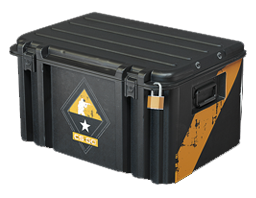
Retired CS2 cases are containers Valve has pulled from the active drop pool, which freezes their supply and, for the scarce ones, sends their price climbing — the original CS:GO Weapon Case and the Operation Bravo Case are the headline examples. On 17 December 2025 Valve went further and removed the rare weekly drop pool entirely, the last route by which discontinued cases entered circulation. This guide documents what "retired" means, which cases are affected, and why it moves prices.
What "retired" means for a case
A case is retired when it stops appearing in the weekly free-drop rotation, so no new copies enter the economy. New cases join the rotation at release; over time Valve rotates older ones out, first into a lower-frequency "rare" pool and eventually out of drops entirely. Once a case is out of circulation, every copy that is opened is gone for good and the supply of unopened containers can only shrink. That is the whole mechanism behind rare-case prices — not what is inside them, since the odds are identical everywhere, but how few sealed copies remain.
This is the mirror image of the cheap current cases. The Kilowatt and Revolution cases are worth pennies precisely because they still drop every week; a retired case can be worth a hundred times as much for the opposite reason.
The 17 December 2025 rare-pool removal
The biggest recent change was the quiet removal of the rare drop pool on 17 December 2025. For years, a small share of weekly drops — around 1% — came from a "rare" pool of older, discontinued cases, which was the last trickle of new supply for legacy containers. Community trackers reported that Valve switched this pool off entirely in December 2025, so those cases no longer enter the economy from free drops at all. Valve published no changelog for the change, so we flag it as community-reported rather than officially confirmed, but the market effect has been consistent with a supply freeze.
Trackers reported that cases including CS20, Horizon, Spectrum 2, Gamma 2, Chroma 3 and the Revolver Case had been moved into that rare pool before it was removed. With the pool gone, the supply of every one of those containers is now capped at what already exists. That is the event to understand if you are trying to make sense of why certain mid-age cases have firmed up over the last year while the newest cases stay cheap.
The original cases and what they hold
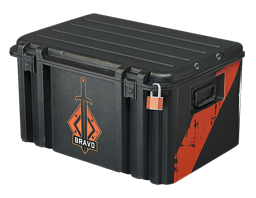
The oldest cases carry a historical premium as well as a scarcity one. The CS:GO Weapon Case, released in August 2013, was the very first case in the game and is the ancestor of everything documented here; the Operation Bravo Case from the same year has long been the most valuable standard container, banding around $50–80 in September 2026. These early cases are associated with legendary finishes — the AK-47 Fire Serpent, the AWP Lightning Strike — that helped define the skin economy, which adds collector demand on top of raw scarcity.

It is worth being precise about what you are buying when you buy an old case. The sealed container itself is the collectible; its contents, if you were ever to open it, still obey the same 0.26% odds as any modern case, so the premium is entirely about scarcity and history, not about better chances inside. In other words, a $60 Operation Bravo Case is not a $60 shot at a good knife — it is a scarce sealed object whose value comes from how few remain unopened. Opening it would simply convert a scarce collectible into an average, negative-expected-value roll, which is why serious holders never open them.
Why retired-case prices rise
Frozen supply plus steady demand equals a rising floor, but it is not a guarantee. The scarce cases drift upward over time because copies are steadily opened and never replaced, while collectors and speculators keep demand alive. The catch is that the wider CS2 skin market is volatile — it swung from about $5.67B in March 2026 down to $3.37B and back above $7B by mid-year — and rare cases move with it. Treat any rare case as a speculative hold, use dated price bands rather than live hype, and never confuse a sealed case's slow appreciation with the losing bet of opening one.
If you are weighing cases as an asset rather than a curiosity, the best-value CS2 cases to hold piece looks at the thesis and its risks in detail, and the rarest and retired cases page keeps dated bands for the specific containers people ask about.
The retirement pattern also gives you a rough way to anticipate which cases are next. Valve has historically rotated the oldest active cases toward the rare pool over time, so the mature cases still in circulation today are the candidates to watch — though after the December 2025 removal there is no rare pool left to rotate into, which makes the future path genuinely uncertain. That uncertainty is itself worth flagging honestly: anyone who tells you exactly which case will be discontinued next is guessing, because Valve gives no roadmap and did not even announce the last change. We document what has happened and date it, and leave the speculation clearly labelled as speculation.
How to buy a retired case safely
Buy retired cases the way you buy any skin — on the Steam Community Market or an established third-party marketplace — never through a case-opening front. Because these containers carry real value, check the dated band against a live price before buying, and remember that Trade Protection (July 2025) makes trades reversible for seven days, so peer-to-peer markets credit sellers roughly eight days after delivery. You can see every current case, and how retirement eventually reshapes their value, on the full CS2 case catalogue.
Frequently asked questions
Which CS2 cases are retired?
Many older cases are out of the active drop pool, and community trackers reported that CS20, Horizon, Spectrum 2, Gamma 2, Chroma 3 and the Revolver Case were in the rare pool that Valve removed on 17 December 2025. The CS:GO Weapon Case and Operation Bravo Case are long-discontinued headline examples.
Why did Valve remove the rare drop pool?
Community trackers reported the rare weekly drop pool was switched off on 17 December 2025, ending the last way discontinued cases entered circulation. Valve gave no official reason, so the change is community-reported; the effect is that legacy case supply is now frozen.
What is the most expensive retired case?
The Operation Bravo Case, banding around $50–80 as of our September 2026 check — the most valuable standard case, discontinued for years so its supply only shrinks.
Are retired cases a good investment?
They are frozen-supply collectibles, which is a real thesis, but the CS2 skin market is volatile and swung sharply during 2026. Treat any case as a speculative hold, use dated bands, and never confuse holding a sealed case with opening one.
See this case alongside every other in the full CS2 case catalogue, ranked by contents, odds and price band.